Best Plasma Cutters for 2026: Reviewed and Ranked
Best Plasma Cutters for 2026: Reviewed and Ranked
A plasma cutter is the fastest, cleanest way to cut steel, stainless, aluminum, and most conductive metals. Unlike grinders or oxy-fuel cutting, plasma leaves a narrow kerf, minimal heat distortion, and a cut ready for welding with little prep work. Once you use one, you wonder how you worked without it.
This guide covers the best plasma cutters available in 2026 — from compact 110V units that live in the back of a truck to professional-grade machines that cut 1-inch steel all day. Whether you are a first-time buyer or upgrading from an underpowered unit, there is a machine here that fits your work and budget.
How Plasma Cutters Work
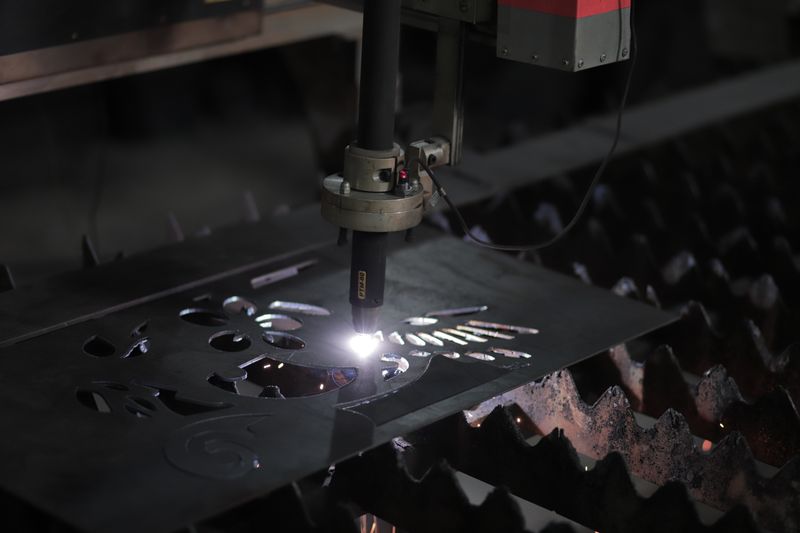
A plasma cutter passes compressed air through a small nozzle where an electric arc ionizes the gas into plasma — a superheated fourth state of matter that reaches around 40,000°F. That plasma jet melts through metal while the high-velocity air blows the molten material away, leaving a clean cut edge.
Unlike MIG or TIG welding, plasma cutting requires compressed air. All machines on this list include an integrated air compressor rating or assume an external compressor. This is an important consideration when budgeting: if you do not own a compressor, factor that cost in.
What to Look for in a Plasma Cutter
Rated cut capacity: Manufacturers list two cut ratings — clean cut and severance cut. Clean cut is the maximum thickness at which the machine produces a smooth, dross-free edge at a practical travel speed. Severance cut (or max cut) is the absolute thickness the machine can penetrate at very slow speed with rougher results. Always size your machine to your clean cut requirement, not the severance rating.
Amperage: Output amperage is the primary driver of cut capacity. Budget units typically run 20–40 amps. Mid-range units run 40–60 amps. Professional machines run 65–125 amps. A 40-amp machine cleanly cuts 1/4 inch steel; a 60-amp machine handles 5/8 inch cleanly.
Duty cycle: More important for plasma cutting than for welding because cutting runs long, continuous arcs. A 40% duty cycle at rated amperage means 4 minutes on, 6 minutes off per 10-minute cycle. For production cutting, look for 60% or better. Most budget 110V machines have duty cycles around 35%.
Air supply: Budget machines require 4–6 CFM at 60–70 PSI. Professional machines (60+ amps) often require 6–8 CFM at 90 PSI. Match your compressor to the machine before buying — inadequate air pressure is the number-one cause of poor cuts and consumable burnout.
Pilot arc (HF start vs. drag/contact start): High-frequency (HF) start allows cutting without touching the tip to the work. This is important for cutting expanded metal, grating, or any surface where arc starting is difficult. Contact/drag start is simpler and cheaper. Most budget units use drag start; professional units use HF or blowback pilot arc.
Input voltage: Most 110V machines top out around 40 amps. For serious cutting capacity, you need a 220V machine. Dual-voltage machines that auto-detect or switch between inputs offer the best flexibility.
Consumables: Consumable costs (tips, electrodes, shields) vary significantly between brands. Hypertherm consumables last two to three times longer than generic alternatives — a real factor in long-run operating cost.
Top Plasma Cutters for 2026
1. Hypertherm Powermax 45 XP — Best Professional-Grade Plasma Cutter
Price: ~$1,800 | Input: 200–240V (single or 3-phase) | Output: 45 amps | Clean Cut: 5/8” | Duty Cycle: 50% at 45A
The Hypertherm Powermax 45 XP is the benchmark for professional plasma cutting. Hypertherm is the only major plasma cutter manufacturer headquartered in the United States, and their machines consistently deliver better cut quality, longer consumable life, and more reliable performance than anything at a comparable price.
What we like:
- Clean 5/8” cut capacity on steel, stainless, and aluminum
- SmartSense technology automatically adjusts to 200–240V power
- Consumables last 2–3x longer than competing brands
- Drag-cutting shield allows direct-contact cutting without tip damage
- Duramax 45A torch is comfortable and precise
- 3-year warranty with a U.S.-based service network
What we don’t like:
- High initial cost — this is a professional tool at a professional price
- Does not run on 110V
Best for: Fabrication shops, contractors, mobile welders, and serious home fabricators who cut regularly and understand the value of quality consumables and service support.
2. Miller Spectrum 375 X-TREME — Best Portable Professional Plasma Cutter
Price: ~$1,050 | Input: 120V / 240V | Output: 27–30 amps | Clean Cut: 3/8” | Duty Cycle: 35% at 27A
The Miller Spectrum 375 X-TREME is Miller’s entry into the professional portable plasma cutter market. The Auto-Line technology accepts 120V or 240V input without rewiring — connect to whatever power is available on the job site.
What we like:
- Auto-Line accepts any input from 120V to 240V without adjustment
- Built-in air filter and regulator — no external filtration required
- Wind Tunnel Technology protects internal components from contamination
- Industrial-grade build quality typical of the Miller brand
- True 3/8” clean cut capacity on either voltage input
What we don’t like:
- Rated output is lower than comparable 220V-only machines at this price
- Duty cycle is modest — not built for continuous production cutting
Best for: Contractors, mobile fabricators, and job-site welders who need reliable plasma cutting from variable power sources.
3. Lincoln Electric Tomahawk 625 — Best Mid-Range Plasma Cutter
Price: ~$750 | Input: 208–230V | Output: 40 amps | Clean Cut: 5/8” | Duty Cycle: 40% at 40A
The Lincoln Electric Tomahawk 625 delivers professional cut capacity at a price well below the Hypertherm tier. Lincoln’s name-brand quality and U.S. service network make this the preferred mid-range choice for buyers who want more than an import machine can offer.
What we like:
- Genuine 5/8” clean cut capacity from a trusted American brand
- 40% duty cycle — solid for shop and occasional production use
- Lincoln’s 3-year warranty and U.S. service network
- XT40 torch is comfortable and accepts Lincoln-branded consumables
- Intuitive controls — no digital menus or complex setup
What we don’t like:
- 208–230V only — no 110V capability
- Heavier than comparable inverter-based import machines
Best for: Home fabricators, auto shops, and tradespeople who want Lincoln quality without paying Hypertherm prices.
4. PrimeWeld CUT60 — Best High-Value Import Plasma Cutter
Price: ~$450 | Input: 220V | Output: 60 amps | Clean Cut: 3/4” | Duty Cycle: 60% at 60A
The PrimeWeld CUT60 has developed a strong following in the home-shop and small-fabrication community for one simple reason: it delivers 60-amp output and a 60% duty cycle at a price that undercuts comparable machines by 40–50%. PrimeWeld offers U.S.-based customer support and a 3-year warranty — rare for an import brand.
What we like:
- 60-amp output cleanly cuts 3/4” steel
- 60% duty cycle at rated amperage — production-ready
- 3-year warranty and U.S.-based customer support
- Pilot arc start eliminates contact-start limitations
- Compatible with standard ESAB-style consumables (widely available and affordable)
- Includes a full accessory kit
What we don’t like:
- 220V only — no 110V option
- Some users report consumable quality inconsistency
- Brand is newer and less established than Lincoln, Hypertherm, or Miller
Best for: Serious home-shop fabricators and small shops who need 60-amp performance on a tight budget and appreciate U.S. support backing.
5. Lotos LTP5000D — Best Budget 110V Plasma Cutter
Price: ~$200 | Input: 110V/120V | Output: 50 amps (non-peak) | Clean Cut: 1/4” | Duty Cycle: 35% at 50A
The Lotos LTP5000D is the most popular entry-level plasma cutter on the market. At $200 from a standard 110V outlet, it allows first-time buyers to get into plasma cutting without a dedicated 220V circuit or a major capital outlay.
What we like:
- Plugs into any standard 120V outlet
- Clean 1/4” cut capacity on steel and aluminum
- Dual voltage capability (110V/220V) — upgrade your circuit later
- Non-touch pilot arc for better starts on expanded metal
- Lowest price for a functional, reliable plasma cutter
- Includes all consumables and accessories to start cutting immediately
What we don’t like:
- Real-world clean cut on 110V is closer to 3/16” at a comfortable travel speed
- Duty cycle limits continuous use — needs rest breaks during longer cuts
- Consumable life is shorter than premium brands
- Customer support can be slow
Best for: First-time plasma cutter buyers, hobbyists, occasional users, and anyone testing the waters before committing to a higher-budget machine.
6. Yeswelder CUT-55DS — Best Mid-Range Import Value
Price: ~$300 | Input: 110V/220V | Output: 50 amps | Clean Cut: 3/8” | Duty Cycle: 60% at 35A
The Yeswelder CUT-55DS sits between the Lotos and the PrimeWeld CUT60 — dual voltage, 50-amp output, and a digital display in a compact package. The 60% duty cycle at lower amperage settings makes it genuinely practical for longer cutting sessions.
What we like:
- Dual voltage (110V or 220V) — maximum flexibility
- Digital display for precise parameter control
- Non-touch pilot arc for better performance on painted or rusty surfaces
- 60% duty cycle at lower settings
- Compact and lightweight (12 lbs)
What we don’t like:
- Clean cut at 110V limited to around 3/16–1/4” at comfortable speeds
- Build quality is a step below PrimeWeld despite similar pricing
- Consumables are proprietary format — less selection than ESAB-style standard
Best for: Budget-conscious buyers who want dual-voltage flexibility and better duty cycle than the Lotos, without stepping up to the PrimeWeld price.
Plasma Cutter Comparison Chart
| Model | Price | Input | Clean Cut | Duty Cycle | Best For |
|---|---|---|---|---|---|
| Lotos LTP5000D | ~$200 | 110/220V | 1/4” | 35% @ 50A | Best budget 110V |
| Yeswelder CUT-55DS | ~$300 | 110/220V | 3/8” | 60% @ 35A | Best mid-range import |
| PrimeWeld CUT60 | ~$450 | 220V | 3/4” | 60% @ 60A | Best high-output value |
| Lincoln Tomahawk 625 | ~$750 | 220V | 5/8” | 40% @ 40A | Best name-brand mid-range |
| Miller Spectrum 375 X-TREME | ~$1,050 | 110/240V | 3/8” | 35% @ 27A | Best portable pro |
| Hypertherm Powermax 45 XP | ~$1,800 | 200–240V | 5/8” | 50% @ 45A | Best professional overall |
Essential Plasma Cutting Accessories
A plasma cutter is only as good as its consumables and accessories. Budget for these alongside your machine purchase:
- Replacement consumables: Stock up on tips and electrodes for your specific machine — consumables determine cut quality and should be replaced before they fail, not after. Lincoln Electric Tomahawk consumable kit
- Plasma cutting guide/circle cutter: ESAB Adjustable Circle Cutter — makes repeatable straight and circular cuts without a CNC table
- Cutting table / downdraft table: Protect your workbench and collect slag. Metal cutting table with slats — a must-have for shop use
- Air filter/dryer: Moisture in the air line destroys consumables and ruins cut quality. Campbell Hausfeld air filter/dryer — essential if your compressor does not have integrated moisture removal
- Welding gloves: Plasma cutting generates less UV than welding but still requires eye and hand protection. Lincoln Electric Traditional MIG gloves work well for cutting
- Auto-darkening helmet or face shield: A shade 5–8 lens is sufficient for plasma cutting. The Lincoln Electric Viking 3350 is adjustable from shade 5–13 and covers both cutting and welding
Tips for Better Plasma Cuts
Plasma cutting is intuitive, but a few habits separate clean professional cuts from ragged ones:
Match amperage to material thickness. Running at full amperage on thin sheet metal causes excessive dross and warping. Set your amperage to the lowest setting that cleanly pierces the material.
Control your travel speed. Too slow leaves heavy dross on the bottom edge; too fast leaves an angled kerf. The correct speed produces a light, smooth dross that brushes off easily, with the plasma arc trailing roughly 5–10 degrees behind vertical.
Keep your consumables fresh. A worn electrode (look for a crater deeper than 1/16”) and worn tip cause arc wander, dross buildup, and poor cut quality. Consumables are cheap — replace them before they affect your work.
Dry air is not optional. Moisture in the air supply causes spitting, arc instability, and dramatically shortens consumable life. If your compressor does not have an integrated dryer, add an inline desiccant filter.
Use a guide for straight cuts. Freehand straight cuts are harder than they look. A simple metal straightedge clamped to the work produces professional-quality results consistently.
Which Plasma Cutter Should You Buy?
The right machine depends on your typical material thickness and available power:
- First plasma cutter, 110V power only: Lotos LTP5000D — the lowest-cost way to discover whether plasma cutting is worth the investment.
- Dual-voltage flexibility, mid-range budget: Yeswelder CUT-55DS — better duty cycle and digital control than the Lotos, with 220V potential for the future.
- 220V access, serious home-shop use: PrimeWeld CUT60 — 60 amps and 60% duty cycle at under $500 is exceptional value, backed by a real warranty.
- Name-brand mid-range: Lincoln Electric Tomahawk 625 — Lincoln quality and service network at a price well below the top professional tier.
- Job-site portable professional: Miller Spectrum 375 X-TREME — Auto-Line input handling makes it the most flexible professional machine for variable power environments.
- Best professional machine, period: Hypertherm Powermax 45 XP — if you cut frequently and value superior consumable life and cut quality, the Hypertherm pays for itself over time.
Plasma cutting is one of those shop capabilities that once added, becomes indispensable. The right machine at the right budget will change how you approach every fabrication project.

The Welder's Guide Editorial Team
Independent trade-focused editorial team